
Turkey’s legal profession is organized through a regulated bar association structure. Only attorneys registered with a regional bar association are legally authorized to practice law to represent clients, sign legal documents, and appear before courts and public authorities.
This structure exists for a reason. It creates institutional accountability. It means that behind every licensed lawyer is a professional record, a registration number, and a regulatory body with the authority to discipline, suspend, or remove that authorization.
For foreign clients, the practical implication is simple: knowing how to verify a lawyer in Turkey is not a formality. It is the first decision in any legal engagement and one of the few that costs nothing
to get right.
At first glance, choosing a lawyer can feel straightforward. A professional website, a confident introduction, a warm recommendation from someone in the network. These signals create the appearance of credibility. In legal systems, appearance and authorization are not the same thing.
The simplest protective step in any legal process confirming that the person providing legal advice is actually licensed to do so is also the step most frequently skipped. Not because it is difficult. Because it does not feel urgent until it is.
This guide explains how the verification system works in Turkey and outlines the practical steps international clients can follow before entering any legal engagement.
This guide explains how the verification system works in Turkey and outlines the practical steps international clients can follow before entering any legal engagement. For those still assessing which type of legal expertise their situation requires, our guide to finding the best lawyer in Istanbul covers how to match legal specialization to a specific matter before verification begins.
⚖️ Why Verification Matters Before Hiring a Lawyer
Finding a lawyer in Turkey appears simple. Search results return quickly. Websites look professional. Referrals arrive with confidence attached.
What those signals do not confirm is legal authorization.
In Turkey, only individuals registered with a Turkish bar association are legally permitted to practice as attorneys. Consultants, agents, and intermediaries may participate in legal-adjacent processes facilitating introductions, coordinating paperwork, explaining procedures but they do not have the formal authority to represent clients before courts, government institutions, or regulatory bodies. The distinction matters more than it initially appears.
Licensed lawyers operate under professional regulations and ethical obligations enforced by their bar association. That institutional structure creates accountability that extends beyond the individual. When something goes wrong when advice is incorrect, when a document is improperly handled, when a client’s interests are not protected bar registration is what makes professional recourse possible.
For international investors and foreign clients entering the Turkish legal system, verification is therefore not only about confirming a license. It is about ensuring that the person providing advice is embedded in a system of accountability not operating outside it.
🏛️ How the Turkish Bar Association System Works
The legal profession in Turkey is organized through regional bar associations operating under the authority of the Union of Turkish Bar Associations. Every practicing attorney must be registered with the bar association in the city where they practice. Without that registration, a person cannot legally represent clients or provide official legal services.
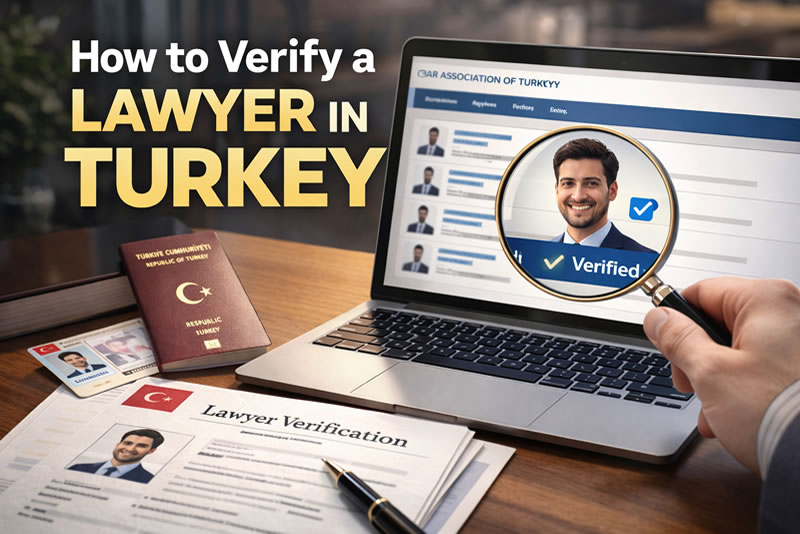
Bar associations maintain official records of licensed lawyers names, registration numbers, and current status. These records are not internal documents. They are accessible reference points that any client can use to confirm whether a legal professional is properly authorized.
This system performs a function that is easy to overlook: it separates the legal profession from the much broader category of people who present themselves as operating within it. Consultants, advisors, and intermediaries may carry professional titles and speak with authority about legal processes. Bar registration is what distinguishes them from lawyers.
For foreign clients navigating property transactions, investment structures, corporate formation, or citizenship procedures, understanding this distinction is not a technical detail. It is the foundation of any informed legal decision.
🔎 Steps to Verify a Lawyer in Turkey
The verification process is straightforward when approached systematically.
Request bar registration information. Every licensed attorney in Turkey holds a bar number and is affiliated with a specific regional bar association. This information should be available in professional correspondence or on the lawyer’s official profile. If it is not offered, it should be requested directly.
Check the bar association directory. Most Turkish bar associations maintain searchable public directories. The Union of Turkish Bar Associations provides a central search tool. For lawyers based in Istanbul, the Istanbul Bar Association directory covers one of Turkey’s largest legal markets.
Evaluate professional transparency. Licensed lawyers typically operate through identifiable law offices, maintain clear communication channels, and provide explicit terms regarding fees, scope of work, and professional responsibilities. Opacity about any of these elements warrants closer examination.
Conduct a direct consultation. A brief conversation often reveals more than a directory search. A lawyer who can explain the legal structure surrounding the client’s specific issue clearly, without unnecessary complexity demonstrates both knowledge and the kind of professional orientation that makes legal guidance useful rather than merely present.
Verification is not only about confirming a license. It is about understanding the professional environment in which advice will be delivered and whether that environment is one that protects the client’s interests.
⚠️ Common Mistakes Foreign Clients Make
The most common errors in legal engagement are not made from ignorance. They are made from speed.
International clients entering a new legal environment sometimes assume that anyone participating in a legal process is a licensed lawyer. Real estate consultants, immigration agents, and online intermediaries may coordinate introductions and explain procedures but they are not legal representatives. The distinction is invisible until it becomes consequential.
A second common mistake is treating digital presence as a proxy for professional authorization. A polished website and strong search ranking create a strong impression. They do not confirm bar registration. The gap between how a professional appears online and what they are actually authorized to do is precisely where verification closes the risk.
A third pattern is the pressure of timing. Property transactions, citizenship applications, and investment decisions often carry genuine urgency. That urgency creates a temptation to compress the due diligence process to move quickly past verification steps that feel procedural in the moment and only reveal their importance later.
The consequences of incorrect legal advice do not typically surface immediately. They accumulate quietly in a clause that was not properly explained, a document that was not correctly verified, a regulatory requirement that was never identified. By the time they become visible, the window for straightforward correction has often already closed.
🧭 How to Find a Verified Lawyer in Turkey
Understanding verification changes how the selection process feels. It shifts the question from “which lawyer looks right?” to “which lawyer is confirmed to be right?”
International clients can search for registered attorneys directly through the Union of Turkish Bar Associations lawyer directory. This is the most reliable starting point an official record rather than a curated list.
For foreign investors, the Presidency of the Republic of Turkey Investment Office also provides institutional context about Turkey’s legal and regulatory framework useful background for understanding the environment in which legal decisions are made.
A broader overview of how international clients identify and evaluate legal representation is available in the guide on finding a lawyer in Turkey.
Verification transforms the process of finding a lawyer from a search based on appearance into a decision based on structure. For international clients operating in an unfamiliar legal environment, that shift from impression to confirmation is where legal risk is most effectively managed.
❓ Frequently Asked Questions
How can I check if a lawyer in Turkey is licensed?
You can verify whether a lawyer is licensed by requesting their bar registration number and checking their status through the relevant Turkish bar association directory.
Can foreign clients hire lawyers in Turkey?
Yes. Foreign individuals and international investors can freely hire Turkish lawyers to represent them in legal matters, contracts, property transactions, and court proceedings.
Do I need an English-speaking lawyer in Turkey?
For international matters, working with an English-speaking lawyer can help ensure that legal procedures, documentation, and risks are clearly understood by foreign clients.
Why is verification important before hiring a lawyer?
Verification confirms that the lawyer is authorized to practice law and subject to professional oversight by a bar association. This protects clients and ensures that legal advice is provided within the official legal framework.
Where can I verify a lawyer through the Turkish Bar Association?
Lawyers in Turkey can be verified through official bar association records and the lawyer search system provided by the Union of Turkish Bar Associations.